

The Archive as Shield
Sometimes, all that stands between institutional memory and strategic delay is an archive.
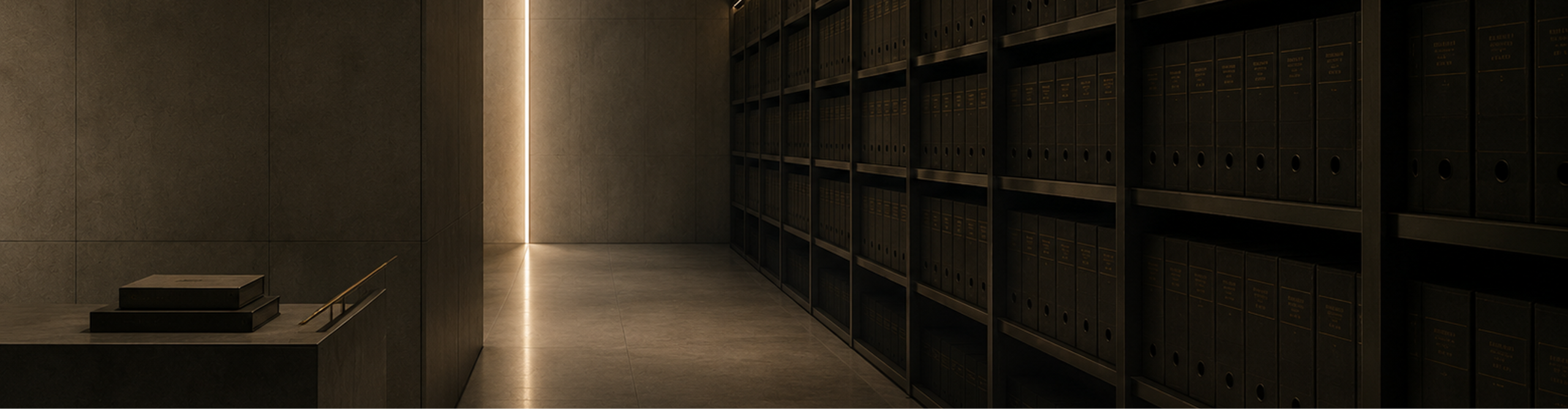
The archive ought to stand as the living memory of institutions. Yet, too often, it becomes a shield against change. Reports, minutes and legal opinions are invoked not to illuminate the path forward, but to close discussions, turning the document into a surrogate for decision.
The document is preserved; the decision is postponed.
In 2002, Eric Ketelaar described archives as “temples and prisons”: spaces of preservation, but also of concealment. Within European public administration and health systems, this paradox is stark. Plans and audits proliferate, projecting an appearance of robustness, yet their execution remains residual. The document endures; the decision is deferred.
Paradoxically, while certain records accumulate to the point of saturation, others those capable of exposing responsibility or guiding reform quietly vanish. Misplaced reports, missing opinions or inaccessible databases expose the selective nature of the archive: retaining what is convenient, erasing what is compromising. As early as 1992, UNESCO’s Memory of the World Programme warned that the loss of critical documentation constitutes a direct threat to transparency and to the future of governance itself, a programme that remains active today, with periodic revisions and reports underscoring its enduring relevance.
Thus, the archive ceases to function as an instrument of learning and becomes instead a refuge of inertia. It sustains the illusion of order while masking the absence of direction and, in that void, many institutions forfeit their very capacity to decide.
Conceptual References
Eric Ketelaar – archives as memory, power, and institutional concealment.
UNESCO - Memory of the World Programme.
Critical fragments on the silences that shape decision-making.
 5 min Read
  OCTOBER 2025